Science News
 American
Science News for 30 July 2018
American
Science News for 30 July 2018
3D-printed artificial intelligence running at the speed of light--from object classification to optical component design
Phys.org - 30 Jul 2018 16:35 Deep learning is one of the fastest-growing machine learning methods that relies on multi-layered artificial neural networks. Traditionally, deep learning systems are implemented to be executed on a computer to digitally...
MIT Study Shows Off Chemical-Detecting Machines the Size of a Human Egg Cell
Singularity Hub - 30 Jul 2018 17:00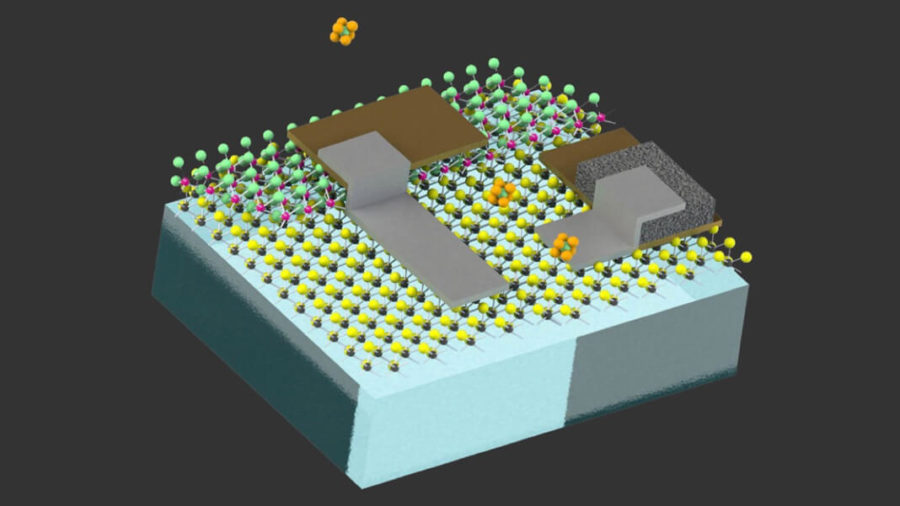 Robots are excellent tools for gathering information from areas humans can’t reach. And now new speck-sized machines from MIT could extend that capability to carrying out diagnostics inside the human body, wafting thro...
String Theory May Create Far Fewer Universes Than Thought
Live Science - 30 Jul 2018 07:12 Some physicists claim the popular landscape of universes in string theory may not exist.
The Heritability of Anxiety
Neuroscience News - 30 Jul 2018 23:14
A new study reports individual differences in connectivity between areas of the brain associated with fear and anxiety are heritable.
Trapping light that doesn't bounce off track for faster electronics
Phys.org - 30 Jul 2018 22:01 Replacing traditional computer chip components with light-based counterparts will eventually make electronic devices faster due to the wide bandwidth of light.
Lack of a Single Molecule May Indicate Severe and Treatment Resistant Depression
Neuroscience News - 30 Jul 2018 21:17
A new study reports patients with major depressive disorder and treatment resistant depression have decreased levels of acetyl-L-carnitine in their blood. The findings could lead to new blood tests to diagnose the nature...
What Keeps the Brain Awake?
Neuroscience News - 30 Jul 2018 19:45
A new study reveals a specific pathway in the brains of fruit flies that prevents them from falling asleep during the day.
Women have more miscarriages than live births over their lifetime
New Scientist - 30 Jul 2018 19:24
A study that brings together many different findings concludes that miscarriages are even more common than we thought
How Time Affects Learning
Neuroscience News - 30 Jul 2018 19:18
Researchers report people retain arbitrary associations when they learned the associations in short sessions spaced over a few weeks rather than one 20 minute session.
$2.99 or $3.00? Will a Penny Difference Get You to the Checkout Counter?
Neuroscience News - 30 Jul 2018 18:53
A new study reveals nine ending prices are not universally effective at getting shoppers to the checkout line.
Brain Game Doesn't Offer Brain Gain
Neuroscience News - 30 Jul 2018 18:49
Researchers debunk claims that regularly using brain training games can give you an advantage in performance with untrained cognitive tasks.
Terraforming Mars might be impossible due to a lack of carbon dioxide
New Scientist - 30 Jul 2018 18:00
We need lots of carbon dioxide to make Mars habitable for Earth life - and it turns out there isn't enough on the Red Planet
How Do You Know If Your Cut Has Flesh-Eating Bacteria?
Live Science - 30 Jul 2018 17:35 Given the gravity of the condition, people with necrotizing fasciitis need immediate medical care. But how do you know if your cut has flesh-eating bacteria?
Where does space begin? Here's why it's closer than you think
New Scientist - 30 Jul 2018 17:20
The jump from Earth to space is often thought to happen 100 kilometres up, but it's time to think again and bring the boundary closer to home, says Jonathan McDowell
Feel Light Headed When Standing Up? You May Have a Greater Risk of Dementia
Neuroscience News - 30 Jul 2018 17:18
A new study reveals middle aged people who experience lightheadedness or dizziness upon standing, as a result of a sudden drop of blood pressure, may face a higher risk of developing dementia as they age.
Great Tit Birds Have as Much Impulse Control as Chimps
Neuroscience News - 30 Jul 2018 17:15
Researchers report the great tit, a common European songbird, has similar impulse control to that of larger, more cognitively advanced animals.
Nano-optic endoscope sees deep into tissue at high resolution
Phys.org - 30 Jul 2018 17:00 The diagnosis of diseases based in internal organs often relies on biopsy samples collected from affected regions. But collecting such samples is highly error-prone due to the inability of current endoscopic imaging tech...
In a Weyl thermopile--low-power devices may one day run on new heat-based power source
Phys.org - 30 Jul 2018 17:00 A new way to generate electricity in special materials called Weyl magnets has been discovered by physicists at the University of Tokyo. The method exploits temperature gradients, differences in temperature throughout a ...
Material scientists use stimulated Raman scattering microscopy to observe ions moving in liquid electrolyte
Phys.org - 30 Jul 2018 16:19 Lithium metal batteries hold tremendous promise for next-generation energy storage because the lithium metal negative electrode has 10 times more theoretical specific capacity than the graphite electrode used in commerci...
Another Dark-Matter Search Fails -- Shedding Light on the Universe
Live Science - 30 Jul 2018 15:50 Dark matter has, once again, failed to turn up where researchers hoped they might find it. Here's what that means.
Mass graves found on Scottish islands may be ancient tsunami victims
New Scientist - 30 Jul 2018 15:26
A rare tsunami may have struck the islands of Shetland and Orkney off the UK's north coast 5500 years ago, killing dozens of people who had to be hastily buried
LHC accelerates its first 'atoms'
Phys.org - 30 Jul 2018 14:30 Protons might be the Large Hadron Collider's bread and butter, but that doesn't mean it can't crave more exotic tastes from time to time. On Wednesday, 25 July, for the very first time, operators injected not just atomic...
 Global
 Great Britain
 Indian
 South Africa